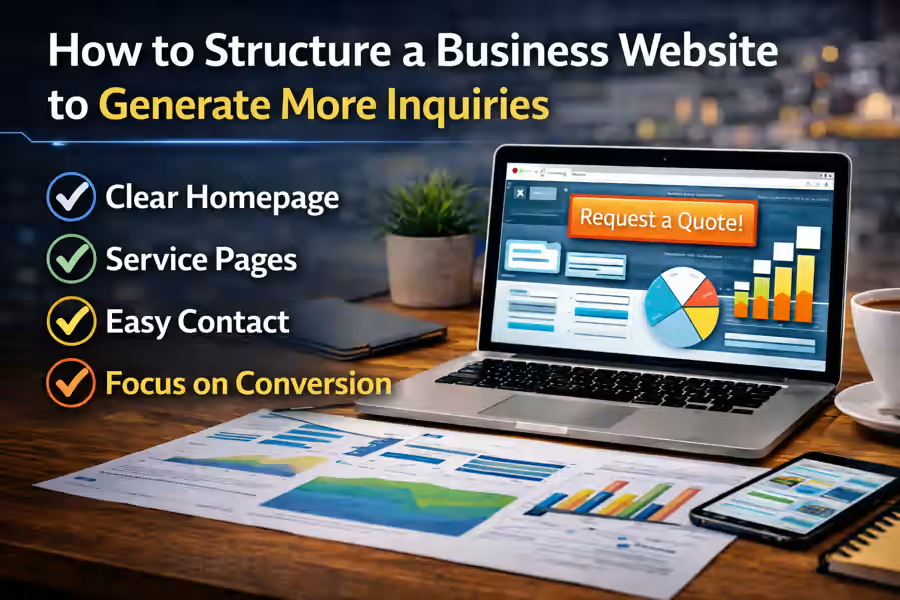
Having a business website is not enough to generate results. Many companies invest in a new website, publish a few pages, and expect inquiries to start coming in. But without a well-planned structure, visitors arrive, browse a little, and leave without taking the next step.
Website structure directly affects how a person understands the company, finds what they are looking for, and decides to get in touch. When everything is organized clearly, the website stops being only institutional and starts working as a real business tool.
If this is one of the core topics of your project, it is also worth starting with the main cluster page:
How to Plan a Business Website That Generates Leads and Clients
Why website structure matters so much
A visitor decides very quickly whether to stay on a website or leave. If the navigation feels confusing, if the pages have no logic, or if the services are poorly distributed, trust starts to drop in the first few seconds.
In practice, a good structure helps do four things:
- show quickly what the company does;
- guide the user to the right page;
- explain services clearly;
- make it easier to request contact or a quote.
So structure is not only about organization. It is also about conversion.
The most common mistake: trying to put everything into too few pages
A very common problem on business websites is concentrating too much information on the homepage or on one generic services page. The company tries to talk about everything at once: who it is, what it does, all services, advantages, frequently asked questions, contact information, and trust signals.
The result is usually the same: a long, generic, and unconvincing page.
A website that generates more inquiries needs to separate content better and place each topic in the right location. This improves readability, helps SEO, and makes the next step feel more natural for the visitor.
What pages a business website should have
Not every website needs the same structure, but there is a foundation that works well for most service-based businesses.
1. Homepage
The homepage should present the company clearly and open the path to the rest of the site. It does not need to explain everything, but it does need to guide the visitor well.
If you want to explore this topic further, see:
How to Create a Homepage That Leads the Client to Take Action
2. About page
The About page should not be only institutional. It should strengthen trust, show experience, explain the company’s positioning, and help the visitor understand who they are dealing with.
3. Service pages
These are some of the most important pages on the website. Instead of having one generic page with a list of services, it is much more effective to create dedicated pages for each main service.
For example, if the company works in the digital space, it may make sense to have pages such as:
Custom Website Development for Modern Businesses
or
WordPress Website Development: a Practical and Professional Solution for Businesses
4. Contact page
The contact page should be simple, clear, and objective. The visitor should immediately understand how to speak with the company and what the next step is.
5. Blog or supporting articles
Articles help answer questions, attract organic traffic, and build authority. They also make it possible to use a cluster strategy, where each article explores one part of the client’s decision-making process.
How to organize services the right way
An effective structure depends heavily on how services are presented. When everything is mixed together, the visitor does not clearly understand the difference between solutions or which one is the best fit.
The ideal is to organize services logically:
- by type of need;
- by type of client;
- by project goal;
- or by specific solution.
This helps the company communicate better and helps the user find the right page without effort.
This point can be explored further in:
How to Organize the Services on Your Company Website
Navigation should reduce doubt, not create effort
A good menu does not need many options. It needs the right options.
When navigation is well planned, the visitor quickly understands where to start. When the menu has vague names, too many tabs, or confusing paths, the experience gets worse.
In most cases, it is better to have simple and direct navigation, focused on:
- Home
- About
- Services
- Blog
- Contact
Depending on the business, there may also be a Portfolio, Case Studies, or FAQ section. The important thing is that the logic of the menu matches the logic of the client’s decision-making process.
Every page needs a clear goal
Another common mistake is creating pages without a defined function. The text exists, the design is done, but the page does not lead anywhere.
Every page on the website should respond to a specific intention. For example:
- the homepage presents and guides;
- the service page explains and persuades;
- the about page builds trust;
- the contact page makes action easier;
- the blog article educates and directs.
When each page performs its role well, the website works as a system. And that increases the chances of generating more inquiries.
Structure and trust work together
A good structure also helps build trust. When the website is clear, organized, and consistent, visitors feel they are dealing with a more serious and prepared company.
Trust also increases when certain elements appear on the right pages, such as:
- testimonials;
- examples of work;
- process explanation;
- frequently asked questions;
- contact details;
- clear and professional language.
To develop this point further, you can connect this page to:
What Trust Elements Should a Business Website Have
The request for action should appear throughout the website
Structuring the website well does not only mean organizing pages. It also means making action easier.
Many companies hide their contact option or depend only on one final page. That reduces the chances of conversion significantly.
Ideally, the invitation to request a quote, get in touch, or start a conversation should appear naturally throughout the website, especially:
- on the homepage;
- on service pages;
- in strategic content sections;
- at the end of the most important pages.
When the action is clear, the visitor needs less effort to move forward.
This problem is directly related to:
Why Your Website Forms Do Not Generate Leads
A well-structured website improves SEO and conversion at the same time
One of the biggest advantages of a strong website structure is that it benefits two areas at once: user experience and SEO.
For the user, it becomes easier to find answers and move forward. For Google, it becomes easier to understand page hierarchy, main topics, and the relationship between content pieces.
When there is a strong main page, well-defined service pages, and supporting articles linked together, the website gains more topical consistency and more ranking potential.
Conclusion
Structuring a business website to generate more inquiries means creating a clear path for the visitor. That path should begin with an understandable value proposition, continue with well-organized pages, reinforce trust throughout the journey, and end in a simple and natural action.
The goal is not to have more pages just for the sake of it. The goal is to have the right pages, organized in the right way, so the website can truly help the business attract opportunities.
When the structure is planned strategically, the website stops being only an online presence and starts working as an active part of the sales process.