
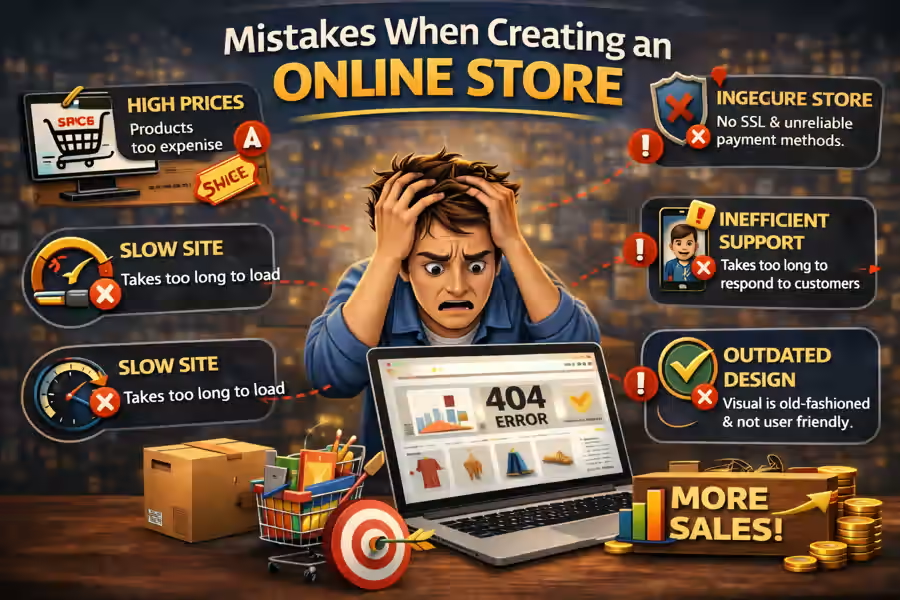
Creating an online store may seem simple at first. Today, there are many platforms, templates, and tools that promise a fast launch. However, an online store is much more than uploading products and waiting for sales.
In 2026, e-commerce competition is stronger, customers compare more options, expect more trust, and have less patience for slow, confusing, or poorly structured websites. Because of that, small mistakes at the beginning can turn into major problems later.
Many businesses invest time and money to launch a store, yet still struggle to generate sales because the foundation of the project was built with flaws.
Before moving forward, it makes sense to understand the broader strategy in How to Choose the Best Online Store for Your Business, because many mistakes begin with the choice of structure, platform, and overall approach.
In this article, we will look at the most common mistakes when creating an online store and what you can do to avoid them.
1. Creating the store without a strategy
One of the most common mistakes is starting with the visual side before defining goals.
Many businesses choose the design, upload products, and only later start thinking about essential questions such as:
- who the ideal customer is
- what kind of products they are going to sell
- what the value proposition is
- how navigation will work
- what the main goal of the store is
Without a clear strategy, the store lacks direction. The result is often a website that looks good but performs poorly.
Before thinking about layout, it is important to understand how the store will work as a business.
2. Choosing the wrong platform
Not every platform is suitable for every project.
Some businesses choose a solution simply because it seems easier or cheaper at the beginning. Later, however, they discover limitations in SEO, design, scalability, or integrations.
The choice of platform should take into account:
- the type of catalog
- the need for customization
- content management
- budget
- future growth
- integration with payments and shipping
This decision is closely connected with WooCommerce or Shopify: Which Platform Should You Choose for Your Online Store.
If you want to avoid technical mistakes and build a stronger foundation for the project, it may be useful to consider professional solutions such as WooCommerce Online Store Development or Professional Shopify Store, depending on your company’s needs, product catalog, and the level of customization required.
When the platform does not support the goals of the business, the store starts creating technical and commercial obstacles.
3. Starting with a confusing structure
A poorly organized online store drives customers away and reduces conversions.
If users cannot quickly understand how to browse, where the categories are, or how to reach checkout, the chance of abandonment increases.
The most common mistakes at this stage include:
- too many categories
- unclear names
- an unfocused homepage
- confusing menus
- missing important pages
A good structure should make navigation easy and guide customers naturally. This point is directly connected with How to Structure an Online Store to Sell More and What Pages Should an Online Store Have.
4. Weak product pages
Product pages are one of the most important elements of any store. Even so, many businesses treat them superficially.
Common mistakes include:
- weak descriptions
- too few images
- poorly visible pricing
- missing shipping details
- no reviews
- unclear buy buttons
When a page does not answer the customer’s main questions, the sale becomes harder.
Product presentation directly affects results. That is why it also makes sense to explore How to Prepare Products for an Online Store.
5. Ignoring conversion
Another very common mistake is creating a store just to “show products” without thinking about conversion.
A well-built store should guide users toward the right action. This requires:
- good visual hierarchy
- clear calls to action
- a simple path to purchase
- trust elements
- an efficient checkout
Without that focus, a store may receive visits but still sell very little.
This topic connects directly with How to Improve the Conversion of an Online Store, because many problems are not about traffic, but about how the store turns visitors into customers.
6. Failing to build trust
An online store needs to look professional, legitimate, and secure.
If users feel uncertain, the purchase does not happen. This is especially important for new or lesser-known brands.
Some mistakes that weaken trust are:
- no visible contact details
- no About page
- amateur design
- unfamiliar payment methods
- unclear policies
- visible errors on the site
Many businesses lose sales not because of the product, but because the store does not feel trustworthy enough.
To better understand this perspective, it is also worth reading What Drives Customers Away from an Online Store.
7. Complicated checkout
Checkout is one of the most sensitive stages of the buying process.
If customers reach this stage, they have already shown intent. Even so, many stores still lose sales here because of simple mistakes.
The most common problems include:
- too many fields
- surprise costs
- forced account creation
- a long process
- unclear final totals
- poor mobile experience
A checkout should be short, intuitive, and transparent. The easier it is to complete the order, the better the conversion rate will be.
8. Forgetting mobile
Today, a large share of traffic comes from smartphones. Creating an online store without thinking mobile-first is a serious mistake.
Common issues include:
- small buttons
- hard-to-use menus
- heavy images
- awkward filters
- uncomfortable checkout
Even if the store works well on desktop, that is not enough. The mobile experience can decide whether a sale happens or not.
9. Ignoring speed and performance
A slow store damages everything: user experience, SEO, paid campaigns, and conversion.
It is common to see stores with:
- oversized images
- too many plugins
- unnecessary scripts
- poor technical optimization
If the site takes too long to load, users leave. It is that simple.
Creating an online store is not only about design. It also requires strong performance.
10. No supporting content
Not every user buys on the first visit. Many need to compare, research, and build trust before moving forward.
If the store has no content that answers those questions, it loses opportunities to attract and educate visitors.
Useful topics include:
- How Much Does It Cost to Create an Online Store for a Business
- How Long Does It Take to Build an Online Store
- How to Create an Online Store in 2026: Complete Guide for Businesses
This kind of content helps with SEO and supports the decision-making process.
11. Not differentiating the brand
Many stores look the same. They use the same layouts, the same content blocks, and the same generic messages.
When that happens, customers see no reason to buy from one store instead of another.
It is important to make clear:
- what makes the brand different
- what problem it solves
- why customers should trust it
- what makes the offer valuable
A store without a clear identity is easy to forget.
12. Launching too early
Some businesses rush to publish the store and end up launching an incomplete project.
That includes situations such as:
- unfinished pages
- badly uploaded products
- texts that still need revision
- menus with errors
- inconsistent design
- checkout issues
Launching a store before it is ready can damage the brand image from the start.
It is better to launch a smaller project that is done well than to publish an unfinished store.
How to avoid these mistakes
The best way to avoid mistakes when creating an online store is to treat the project as a complete system.
In other words, the store should be built with attention to:
- strategy
- structure
- conversion
- trust
- SEO
- mobile
- performance
It is also worth reviewing the full customer journey and testing the site critically before launch.
Small improvements at this stage can prevent much bigger losses later.
Conclusion
Creating an online store is much more than choosing a platform and uploading products. The mistakes made at the beginning directly affect trust, user experience, and sales.
The most common mistakes include:
- lack of strategy
- the wrong platform
- confusing structure
- weak product pages
- complicated checkout
- lack of trust
- poor mobile experience
- slow performance
Avoiding these problems means building a store that is more solid, more professional, and better prepared to sell.
In many cases, the success of the store depends not only on the product, but on how the whole project is planned from the foundation.
FAQ
What are the most common mistakes when creating an online store?
The most common mistakes include choosing the wrong platform, building a confusing structure, creating weak product pages, making checkout too complicated, and failing to build trust.
Is a beautiful design enough to sell?
No. Design helps, but the store also needs strong navigation, speed, trust, and a clear conversion focus.
Is mobile really that important?
Yes. A large share of visits and purchases happens on mobile devices. If the mobile experience is weak, many sales will be lost.
Is it worth fixing these mistakes after launch?
Yes, but it is better to avoid them from the beginning. Fixing problems before or soon after launch reduces losses and improves results faster.